

A crypto exchange whitepaper is one of the highest-risk documents in the early stage of an exchange project. Investors use it to judge technical credibility, regulators scrutinize it for compliance readiness, and engineering teams depend on it to build a functional system. Yet many startups still hire low-cost “whitepaper writers” who lack technical, economic, or legal understanding. The result is a document that looks polished but collapses under real-world scrutiny leading to fundraising delays, redesign costs, or audit failure. Below are the 5 things founders must evaluate before choosing a whitepaper team.
1. Technical Mastery of Crypto Exchange Architecture
A credible crypto exchange whitepaper must show a deep understanding of how trading systems actually work. Investors look for architectural thinking that reflects the standards of institutional-grade exchanges—not surface-level descriptions of an “order book” or “matching engine.”
At minimum, the whitepaper team must understand:
- Matching engine logic: price–time priority, cancellation flow, latency
- Liquidity routing: internal vs. external order flow, market-maker integration
- Custody architecture: hot–cold wallet design, MPC/HSM key management
- Operational processes: deposit/withdrawal safety checks, reconciliation, throughput
- System constraints: API limits, throttling, queue behaviour, failover design
To illustrate the complexity required, the diagram below shows how high-performance trading systems rely on virtual servers, gateway servers, routing engines, order queues, and load balancing to achieve deterministic execution.
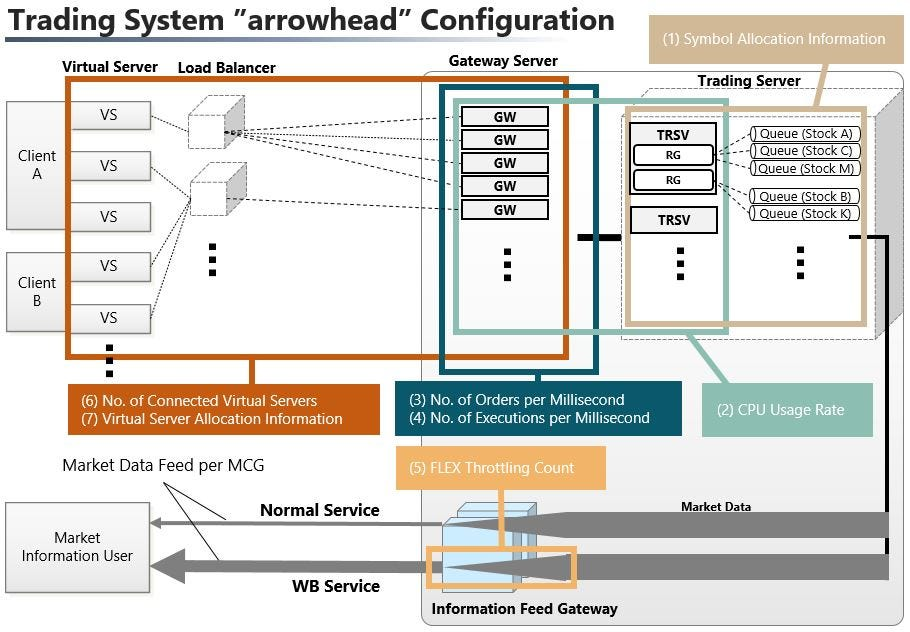
Multi-layer trading system with routing engines and virtual servers. (Source: Databento, Medium)
This matters because scale fundamentally changes system behaviour. CoinMarketCap reports that the top centralized exchanges process over $70B in daily trading volume, a scale that only high-resilience, multi-layer architectures can handle. BIS research further shows that architectural misconfigurations are among the top causes of exchange failures not bugs, but flawed system design.
A whitepaper team unable to articulate system-level architecture forces engineers to backfill gaps later, creating delays, rising development costs, and investor distrust.
2. Tokenomics Engineered Through Real Economic Modelling
Tokenomics is often the most underestimated part of a crypto exchange whitepaper, yet Messari’s 2023 research shows 35% of token failures result from flawed token distribution, weak incentive design, or unsustainable emission schedules.
Sustainable exchange tokenomics require:
- Emission curves based on mathematical modelling
- Maker–taker incentives aligned with real trading behaviour
- Treasury and liquidity strategies that resist supply shocks
- Deflationary or utility-driven sinks tied to actual product usage
- Vesting and release logic that avoids mechanical sell-pressure
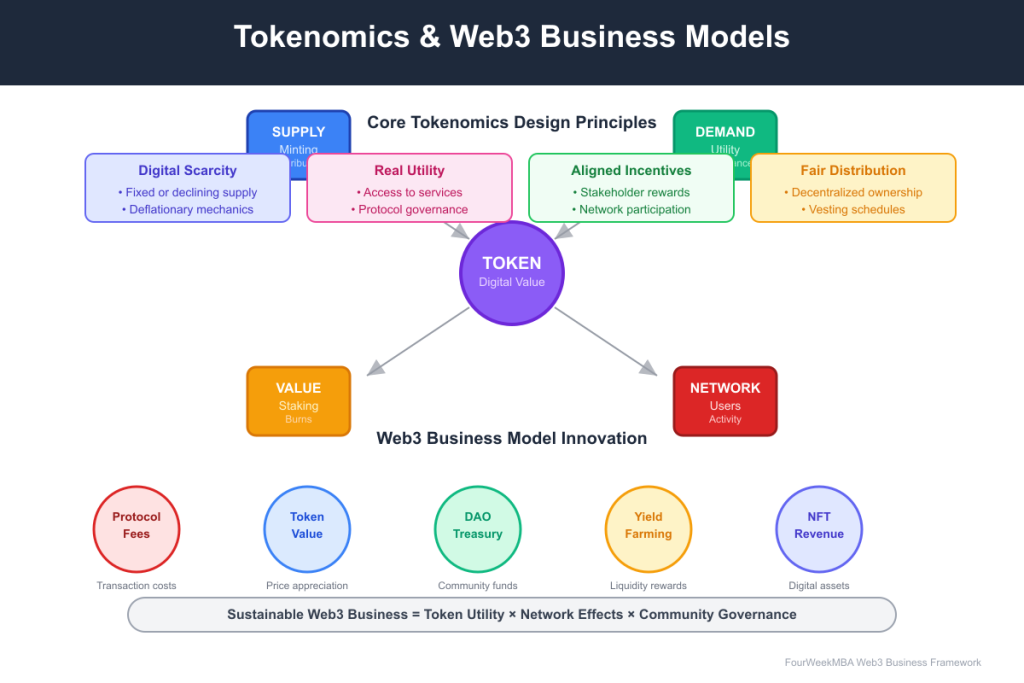
Tokenomics model showing supply, incentives, and network value loops. (Source: FourWeekMBA)
Real-world cases reinforce why rigorous token design matters. Binance’s public burn records show that over 50 million BNB have been permanently removed from supply since launch a predictable, transparent mechanism directly tied to trading activity. This engineered scarcity has contributed to stronger value performance across market cycles, proving the importance of sound economic modelling.
Institutional-grade tokenized systems offer another lesson. Twendee’s research on RWA tokenization demonstrates that investor trust relies on defensible assumptions, not narrative. Exchange tokens follow the same rule: if tokenomics are not mathematically verifiable, they are not investable.
This is why whitepapers must be produced not just by writers, but by tokenomics analysts capable of building scenario-tested economic models.
3. Security and Operational Flows Explained With Engineering Accuracy
Security is the most scrutinized part of any crypto exchange whitepaper and the easiest for weak teams to mishandle. CertiK’s 2023 Web3 Security Report attributes more than $1.7B in ecosystem losses to operational errors such as unsafe withdrawal flows, poor signing logic, and weak custody controls.
A credible whitepaper must demonstrate how the exchange ensures safety across:
- Key management & custody: ECDSA signing, hot–cold separation, MPC/HSM integration
- Withdrawal-risk oversight: velocity limits, throttling, anomaly detection, emergency pauses
- Fund-flow transparency: internal vs. external routing, attack-surface minimization
- User-authentication layers: 2FA, device trust, KYC onboarding risk gates
- Incident-response logic: monitoring anomalies, suspicious withdrawals, signature deviations
- Redundancy & failover: routing, custody, service continuity
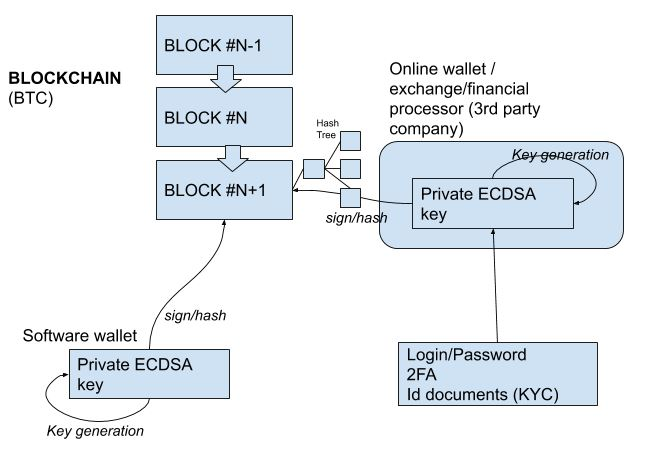
ECDSA key signing flow across software and exchange wallets. (Source: Utimaco)
Why this matters: if private keys are handled improperly centralized storage, weak access controls, or fragmented signing logic the entire exchange becomes vulnerable. These weaknesses grow significantly when integrated with multiple networks, high-frequency withdrawals, or large user bases.
Investors expect realistic failure scenarios and architecture-backed explanations, not marketing claims. A whitepaper that cannot explain security flows with engineering clarity is a liability.
4. Collaborative Production Model for an Exchange-Ready Whitepaper
Most weak crypto whitepapers fail not because the project is bad, but because the writing team is structurally incapable of producing an exchange-ready technical document.
A credible whitepaper requires a multidisciplinary production team including:
- A blockchain architect validating custody logic, throughput assumptions, and system constraints
- A tokenomics analyst modelling supply curves, incentive loops, and liquidity mechanisms
- A compliance specialist familiar with MICA, FATF, Travel Rule, and regional licensing frameworks
- A technical writer able to convert engineering decisions into precise, verifiable documentation
Outlier Ventures reports that projects with interdisciplinary documentation teams are significantly more likely to pass external audits and onboard institutional partners.
When these roles are missing, founders often receive documents containing:
- Token incentives that conflict with trading-engine logic
- Incorrect compliance obligations
- Architectural diagrams disconnected from operational realities
- Economic assumptions that fail under stress scenarios
Twendee prevents these mismatches by pairing blockchain engineers, economists, and compliance specialists within a unified production workflow ensuring the whitepaper is not only clear but technically implementable when the build begins.
5. Real-World Signals Investors Use to Validate Exchange Whitepapers
Compliance is no longer a “post-launch concern.” For crypto exchanges, it is now a core investment criterion. A credible crypto exchange whitepaper must show not only awareness of regulations, but how the exchange will operationalize them at a system level.
Global regulators have moved rapidly in recent years. The World Economic Forum notes that jurisdictions such as the EU, UK, US, Singapore, Japan, Switzerland, and UAE have advanced regulation across licensing, AML/KYC, stablecoin rules, investor protection, and marketing governance. This shift means investors now expect a whitepaper to articulate regulatory interpretability, not legal disclaimers.
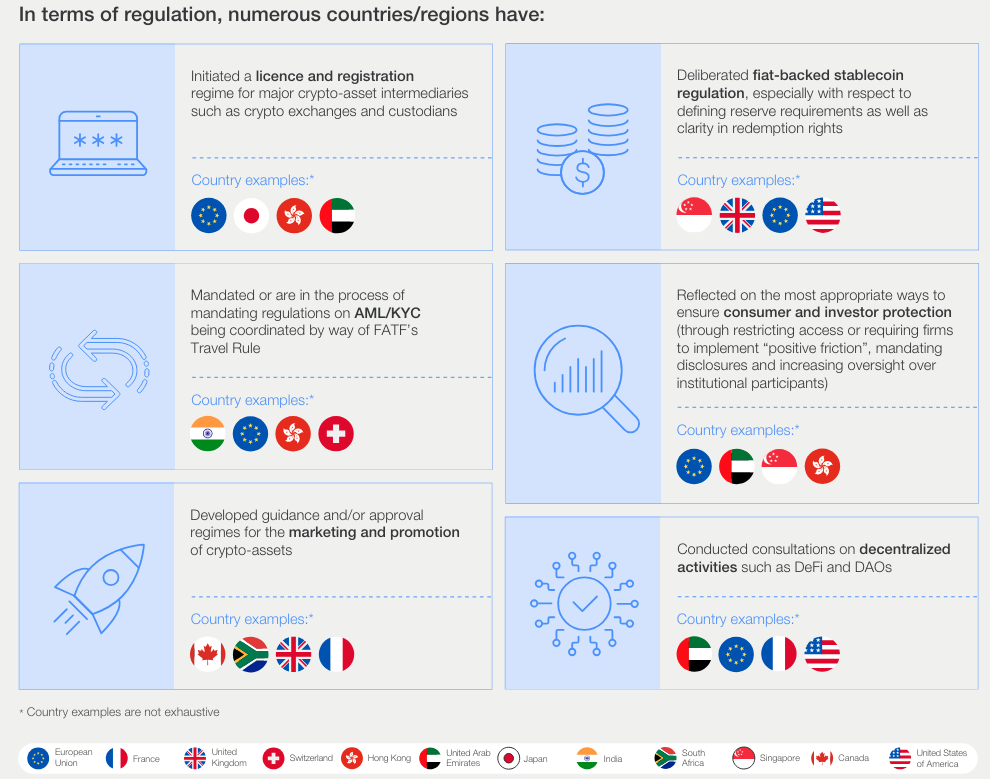
Global crypto regulatory landscape showing licensing, AML/KYC, stablecoin rules, and investor protection requirements. (Source: The World Economic Forum)
Regulatory readiness requires translating legal obligations into technical and operational design, including:
- Clear onboarding logic aligned with AML/KYC and Travel Rule expectations
- Custody segregation and reporting structures meeting MiCA, FCA, or MAS guidelines
- Transaction monitoring and escalation workflows for high-risk behaviours
- Stablecoin redemption and reserve transparency if the exchange supports fiat-backed assets
- Marketing and disclosure standards that affect token listings and incentive programs
What investors want to see is not legal prose, but proof the team understands how regulation constrains architecture and operations. For example:
- Travel Rule compliance affects withdrawal routing and data fields
- MiCA custody rules require cold-storage ratios and auditability
- U.S. marketing regulations shape how utility tokens can be positioned
- Stablecoin frameworks impose reserve disclosure logic and risk gates
Many failed exchanges did not collapse due to technology, but due to incomplete compliance systems that blocked banking relationships, fiat on-ramps, or institutional partnerships.
A strong whitepaper team must demonstrate the ability to break down regulatory requirements into implementable workflows something generalist writers cannot provide. This is why Twendee incorporates compliance specialists alongside architects and economists, ensuring regulatory logic is mapped to actual system behaviour, not added as afterthought.
Conclusion
A credible crypto exchange whitepaper must withstand technical, economic, and regulatory scrutiny. Most failures happen because founders hire generalist writers instead of a multidisciplinary team capable of modelling real token behavior, explaining system architecture accurately, and translating compliance rules into implementable workflows. When these elements are weak, investor confidence drops and development risks rise. Twendee supports teams with architect-level documentation that is both verifiable and buildable.Discover how Twendee helps teams design exchange-ready documentation and long-term-viable crypto products, and stay connected via LinkedIn and X today!