
Building a crypto wallet today requires balancing cutting-edge security with user-friendly design. In 2025, a successful crypto wallet incorporates advanced cryptography (like MPC wallets), robust security features, intuitive Web3 UX, and cross-chain support.
This guide breaks down the must-have features for a secure, user-friendly wallet.
Key Security and Key Management Features
Security is the cornerstone of crypto wallet development. In an environment where digital assets are constantly targeted by malicious actors, your wallet must go beyond basic protection. Modern wallets are expected to implement advanced cryptographic methods and user-friendly recovery mechanisms without compromising safety.
Cryptocurrency wallets safeguard valuable assets, so security is the top priority. Key features include:
- MPC & Multi-Signature Security: Multi-Party Computation (MPC) splits the private key into shares across devices or parties. Likewise, multisig requires multiple approvals for any transfer. Both approaches eliminate single points of failure and greatly reduce hacking risk.
- Encryption & Secure Storage: Use end-to-end encryption and hardware-backed secure enclaves for all key material. Encrypt data in transit (TLS/SSL) and at rest. Storing keys in hardware security modules (HSM) or device enclaves prevents extraction even if the software is compromised.
- Multi-Factor Authentication & Biometrics: Require layered login security. For example, after entering a password the wallet can prompt for a one-time code or fingerprint scan. This ensures that a stolen password alone cannot grant access. Combining SMS/email 2FA or device biometrics adds a crucial second layer of protection.
- Anti-Phishing and Fraud Protection: Implement address whitelists, real-time URL checks, and scam filters. Warn users if they visit spoofed sites or try to sign a malicious transaction. Advanced wallets use phishing detection algorithms to block fake login pages and dangerous requests proactively.
- Session Management & Recovery: Auto-logout idle sessions and lock the app after inactivity. Offer social or multi-sig recovery options (trusted contacts or backup devices) instead of raw seed phrases. For example, encrypted key shares held by friends or backup hardware can help restore access if a device is lost.
- Compliance and Audit Trails: For custodial or enterprise wallets, integrate KYC/AML verification and full transaction logging. Detailed audit trails and reporting help meet regulatory standards and build user trust.
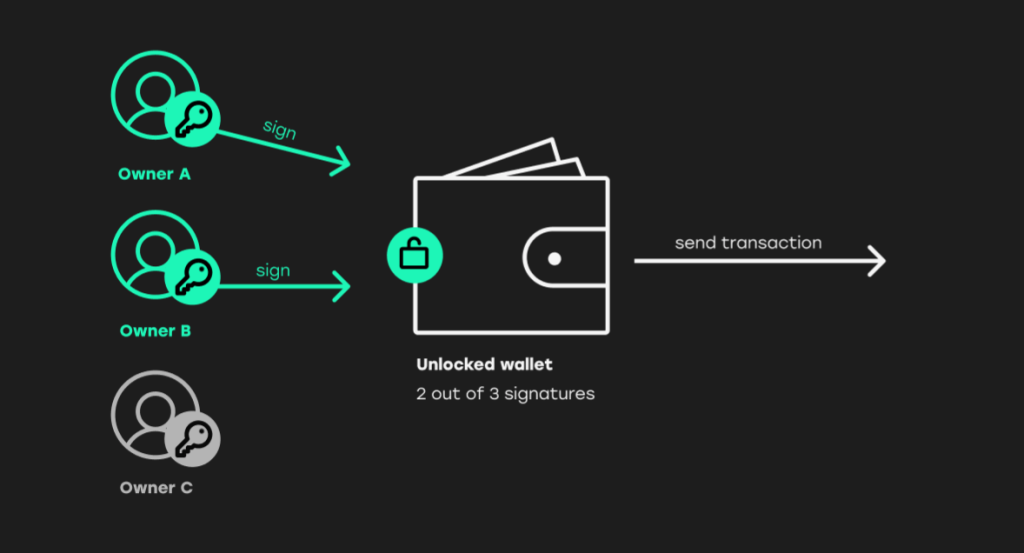
Illustration of a 2-of-3 multisignature wallet flow, where two owners sign to unlock the wallet and authorize a transaction (Source: Zerion)
Combining these layers of protection creates a secure foundation that users can trust. Whether you’re building a consumer-facing wallet or an enterprise-grade solution, implementing these features ensures that your platform meets the highest standards of crypto security.
Cross-Chain and Multi-Asset Support
As the blockchain ecosystem continues to expand, users demand more flexibility from their wallets. A modern crypto wallet is no longer limited to a single chain, it must act as a unified portal to diverse networks, tokens and digital assets. Supporting cross-chain operations and multi-asset management is now essential for both functionality and user retention.
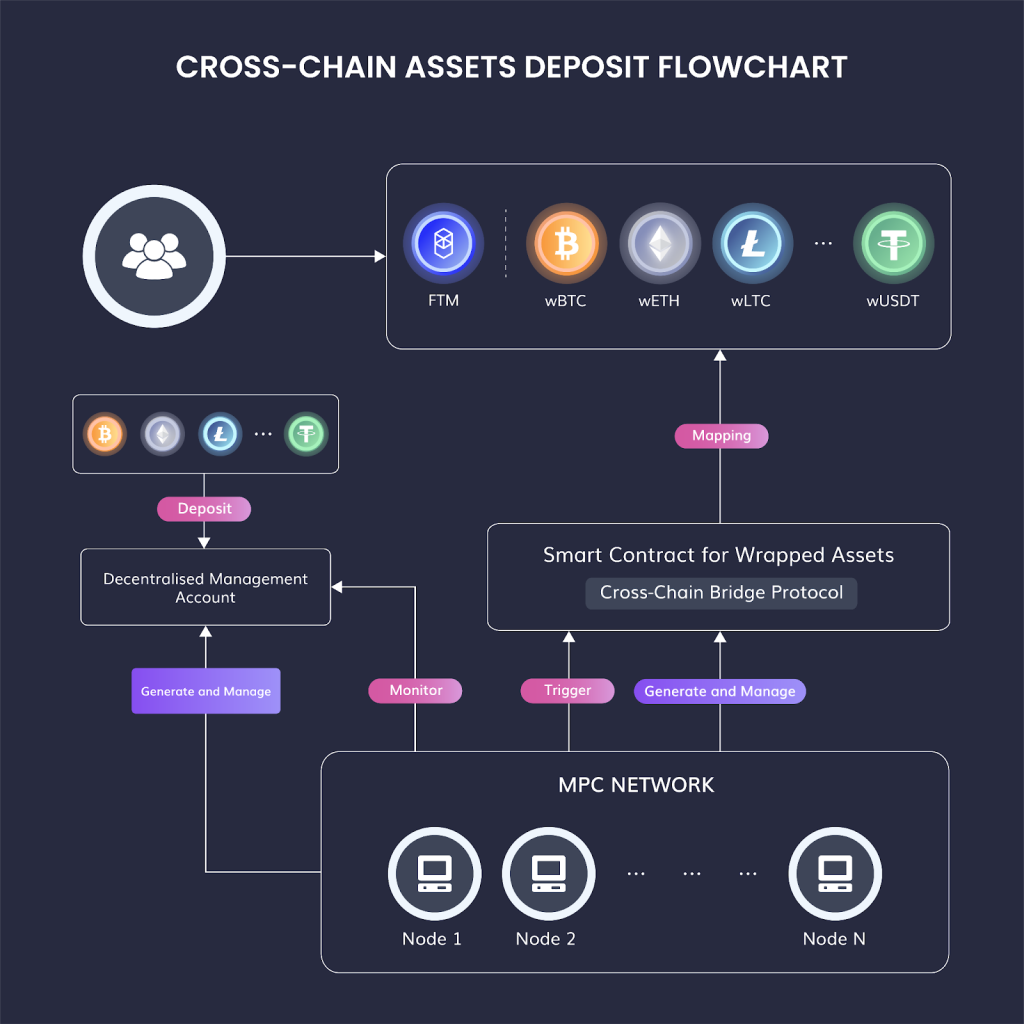
Cross-chain asset deposit flowchart showing wrapped assets, bridge smart contracts and MPC network nodes (Source: Chainlink Docs)
Modern crypto wallets must handle multiple networks and assets:
- Multi-Blockchain Integration: Support all major blockchains from one interface (Bitcoin, Ethereum, Solana, BNB Chain, etc.). Users should see balances and transactions for every network in one unified dashboard.
- Cross-Chain Swaps and Bridges: Built-in cross-chain swap features allow exchanging tokens across networks in-app. For example, swapping ETH for BNB or USDT on different chains without leaving the wallet. Integrated bridges or liquidity networks can automate these transfers seamlessly.
- Multi-Currency & NFT Support: Allow users to store many tokens and collectibles together. Enable easy addition of custom tokens by contract address and display NFTs with images and metadata. A single wallet should hold ERC-20, BEP-20, SPL, and other tokens plus NFTs from multiple networks.
- Fiat On/Off Ramps: Integrate payment gateways so users can convert fiat (USD, EUR) to crypto and back. Supporting credit/debit cards, bank transfers, or services like Apple Pay makes it easy for new users to enter crypto or cash out directly.
Web3-Centric User Experience (UX)
Simplicity is key to adoption:
- Account Abstraction & Wallet Abstraction: Use smart contract wallets to hide seed phrases and gas tokens. Let users sign up with an email or social login while the backend handles key management and gas payment. This makes onboarding as easy as a Web2 app.
- Intuitive Interface & Onboarding: Design a clear, guided user journey. Use simple dashboards and hide blockchain jargon. Clearly label tokens, show fiat equivalents, and explain fees in friendly terms. A setup wizard can automatically detect the user’s language and region, suggesting popular networks and tokens.
- In-App DApp Integration: Include a DApp browser or WalletConnect so users can access DeFi apps, NFT marketplaces, and blockchain games seamlessly. Embedding token swap or staking widgets means users never need to leave the wallet to interact with popular services.
- Notifications and Activity Feed: Keep users informed. Use push notifications for incoming transactions or price alerts, and show an activity log of all transfers. These feedback loops increase confidence that assets are moving and operations are running as expected.
- Responsive Mobile and Web Design: Ensure the wallet works well on phones, tablets, and desktop. Fast load times and an offline mode (caching recent data) improve reliability. Mobile apps should feel native, and web extensions should integrate smoothly with web pages.
Asset Management and Analytics
Modern crypto wallets are evolving from simple transaction tools into comprehensive financial dashboards. Users now expect their wallet to provide insight, control and earning opportunities, not just storage. To stay competitive, wallet developers must integrate features that empower users to actively manage and grow their portfolios.
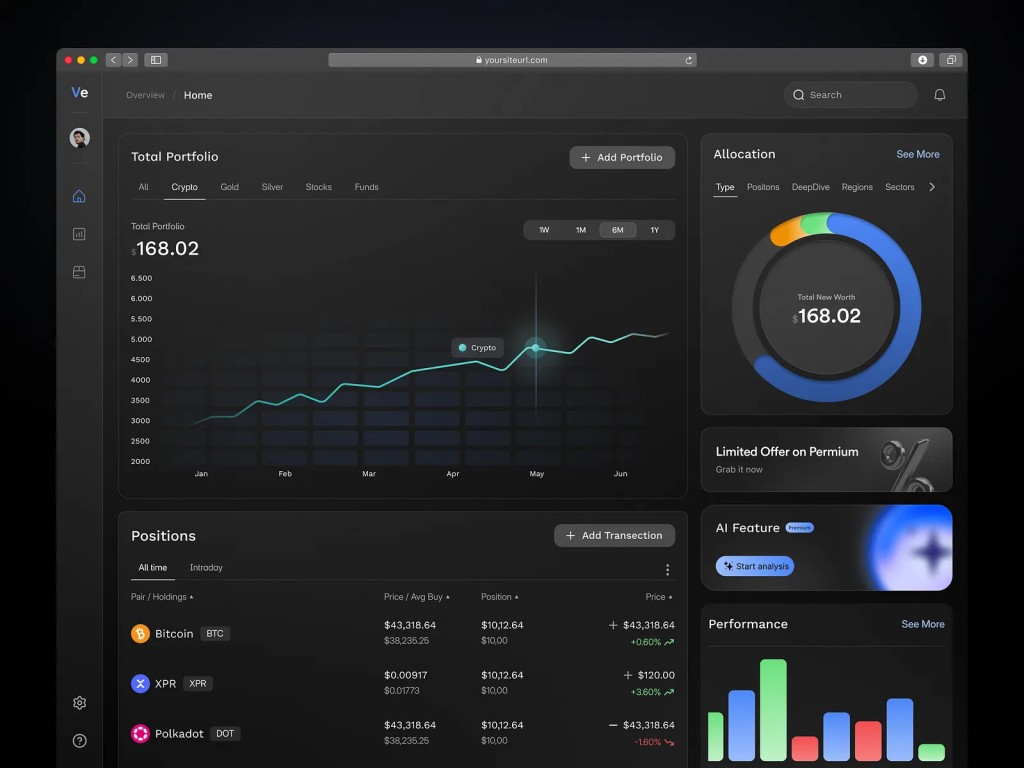
Crypto portfolio dashboard showing real-time charts, asset allocation and token positions (Source: Dribbble)
Beyond basic transfers, wallets should help users manage their portfolio:
- Portfolio Dashboard: Show real-time charts and asset allocation. Allow custom watchlists and price alerts for important tokens. A good dashboard helps users quickly assess their portfolio at a glance.
- Transaction History and Analytics: Provide detailed history with filters and export options. Label transactions (e.g. “Sent to exchange” or “Received from Alice”) to help users keep track. Offering downloadable statements (CSV/PDF) or tax tools adds value.
- Staking and Yield Opportunities: List staking, lending, or liquidity options within the wallet. Users should be able to stake tokens or earn yields without leaving the app. This integration encourages long-term holding and engagement.
- In-Wallet Payments and Purchases: Support crypto payments for bills or shopping. For example, integrate gift card or bill payment services. Adding referral rewards or loyalty features can further incentivize usage.
By embedding analytics, yield tools, and payment capabilities, wallets become central hubs for digital finance.
Scalability and Reliability
As user bases grow and blockchain traffic surges, wallets must be engineered for scale. High performance, resilience and security are no longer optional, they’re foundational requirements. A truly modern wallet is one that can handle peak demand without compromising user trust or functionality.
Performance and uptime are vital:
- Layer-2 / Sidechain Support: To keep fees low and transactions fast, integrate Layer-2 networks (Polygon, Arbitrum, Optimism) or sidechains. The wallet can automatically suggest a cheaper network when it detects high traffic.
- Offline/Hardware Compatibility: Allow pairing with hardware wallets or cold storage. Offline signing and encrypted backup options ensure maximum security for high-value users.
- Continuous Security Updates: Regularly audit the code and deploy updates. A bug bounty program and ongoing maintenance keep the wallet up-to-date against new threats.
- High Availability: For any server-side services, use redundancy and monitoring. The wallet app itself should handle network issues gracefully by retrying transactions and syncing data when connectivity returns.
Scalability and reliability ensure that your wallet performs consistently, even under pressure.
Conclusion
Twendee is a trusted partner in custom crypto wallet development, offering end-to-end services from architecture design to deployment. Our team brings deep expertise in blockchain technology, ensuring your wallet solution is secure, scalable and optimized for real-world use. Whether you’re building for retail users or enterprise environments, Twendee helps you deliver a product that meets the standards of Web3 in 2025 and beyond.
By focusing on these core features, your wallet will meet the highest security and UX standards of 2025. Ready to build a cutting-edge crypto wallet? Twendee’s expert team is here to help. Contact us to see how our crypto wallet development services can bring your vision to life with strong security.
Contact us: Twitter & LinkedIn Page
Read latest blog: Why Web3 Apps Need Risk Oracles, Not Just Price Oracles