
Web3 user adoption is the key to turning innovative blockchain projects into mainstream success. Yet, many Web3 products today struggle to reach real users beyond a small crypto-savvy niche. Despite all the hype and investment in decentralized apps (dApps) and crypto platforms, everyday users often bounce off these products quickly.
In fact, the biggest hurdles to broader adoption come down to web3 UX issues, complex onboarding processes and confusing payment flows that frustrate newcomers. This blog will explore why even a great Web3 product can end up with no real users and how focusing on user experience can bridge the gap.
The Web3 User Adoption Challenge
Web3 has been touted as the future of the internet, but Web3 user growth challenges are proving tougher than expected. Many projects have amazing technology under the hood, yet their active user counts remain low. There’s a clear gap between building a blockchain product and actually getting users to use it. Consider this: despite millions being poured into marketing, it’s common for new decentralized apps to see retention rates fall below 30% after just a few months. In other words, most users who sign up don’t stick around for long. Why is crypto product adoption lagging?
The core issue is that mainstream users find most Web3 applications too confusing or intimidating. Traditional Web2 apps (like online banking, social media, or e-commerce platforms) set a high bar for ease-of-use. They have seamless logins, familiar design patterns, and straightforward transactions. Web3 products, on the other hand, often require users to learn new concepts and navigate unfamiliar interfaces from the get-go. When faced with this steep learning curve, many people simply give up.
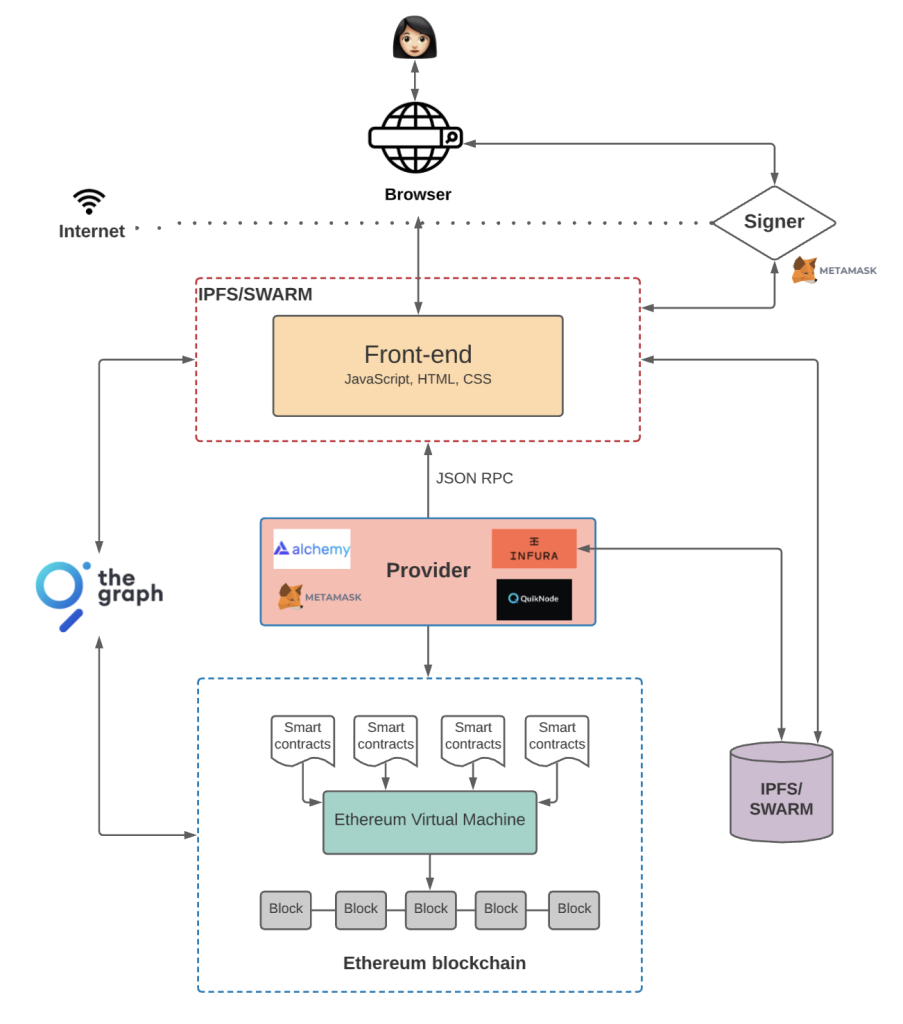
Typical Web3 dApp architecture highlights the complexity of user onboarding, involving wallets, RPC providers, smart contracts and decentralized storage layers (Source: Ethereum developer community)
Importantly, the barrier isn’t the blockchain technology itself – it’s how that technology is presented to users. The underlying networks might be secure and powerful, but that doesn’t matter if a first-time user can’t figure out how to onboard or is scared off by a confusing interface. In the battle for users, accessibility and ease-of-use will win over technical brilliance alone. Next, let’s break down the specific UX and onboarding problems holding back Web3 adoption.
Web3 UX Issues Are Driving Users Away
A major barrier to web3 user adoption is the poor user experience (UX) found in many crypto products. Too often, Web3 apps are designed by and for technical experts, resulting in interfaces that overwhelm the average person. Some common UX issues include:
- Technical Jargon and Cluttered Interfaces: Many dApps bombard new users with terms like “seed phrase,” “staking,” “gas fee,” or “approve contract.” Interfaces often display endless data (hashes, wallet addresses, protocol details) that mean little to a newcomer. This technical jargon and clutter creates confusion. In contrast, popular Web2 apps use simple language and clean designs, guiding users gently. When everyday users open a Web3 app and feel like they need a computer science degree to navigate it, they’re likely to abandon it quickly.
- Lack of Familiar Design Patterns: In Web2, users benefit from consistent design patterns – think of the common placement of menus, shopping cart icons, profile settings, etc. These conventions make apps intuitive to use without a tutorial. Web3 apps, however, often reinvent the wheel. Each dApp might handle navigation, confirmations, or settings in a completely different way. With no standard, users must relearn the UI for every new Web3 product. This inconsistent UX is exhausting and frustrating, reducing the likelihood that a curious user will become a regular user.
- Poor Feedback and Support: Another UX issue is the lack of clear feedback or help when users face an error or have questions. If a transaction fails in a Web3 app, the error message might be a cryptic code or a vague “transaction error” popup. There’s rarely a helpful explanation or an obvious next step. Moreover, decentralized services usually don’t have customer support lines to call. For users used to instant support in traditional apps, this feels unsafe. The result? New users don’t trust the platform or simply can’t figure out what to do next, and they leave.
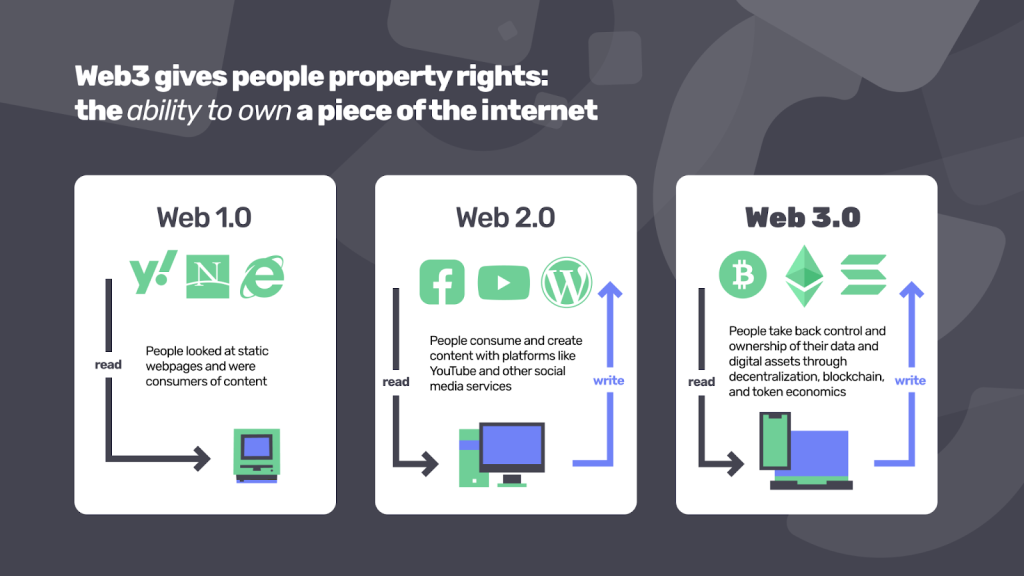
The evolution from Web1 to Web3 shows how the internet has shifted from passive consumption to user ownership. However, this shift also introduces new complexity that many mainstream users are not yet ready to navigate (Source: Blockchain Developer Community)
In essence, web3 UX issues make many decentralized applications user-hostile by accident. Founders and developers who are deep in the blockchain world sometimes don’t see how alien their app appears to newcomers. But if only tech insiders can use your product comfortably, you’ll never achieve real growth. The next big Web3 winners will be those who fix UX pain points and make decentralized apps feel as easy as using any other app on your phone.
Onboarding Friction in Web3: The First Hurdle
If a user can’t get through the onboarding of your product, they’ll never become a real user. Unfortunately, onboarding friction in Web3 is notorious. The onboarding friction web3 platforms present is often the single biggest choke point where potential users drop out. Imagine the typical first-time experience for a non-crypto person:
- Wallet Setup Nightmare: Instead of a quick email signup, they’re asked to create a crypto wallet. This usually means downloading a browser extension or app, then writing down a 12- or 24-word seed phrase (secret recovery phrase) on paper. They might see scary warnings like “if you lose this phrase, you lose access to your funds forever.” For someone new, this is daunting and confusing. It’s not surprising that a huge percentage of users quit at this step. (In fact, one industry report in 2024 found over 50% of potential users abandon the process during wallet creation.) Setting up a wallet can take 20-30 minutes for a newcomer, whereas signing up for a Web2 service takes maybe 2-3 minutes – that contrast is lethal for user conversion.
- Complex Verification and Configuration: Suppose the user perseveres with wallet setup. Next, they often face more hurdles – perhaps they must connect that wallet to the dApp, choose a blockchain network from a list (Ethereum? Polygon? Solana?), or adjust settings they don’t understand. Unlike a Web2 app that automatically handles technical details in the background, Web3 often exposes all this to the user up front. Every extra step or choice (especially without proper explanation) is increasing the chance the user gives up.
- No Immediate Value Before Commitment: Many Web3 products require the user to fully set up a wallet and even fund it before they can do anything fun or useful. Imagine if you had to install a complex plugin and pay a fee just to start using Instagram – you probably wouldn’t bother. This “gated” approach is a huge friction point. Users can’t explore the app’s value proposition casually; they must commit effort and money first. Many decide it’s not worth it when they don’t yet understand the value.
This onboarding friction explains why Web3 user adoption often stalls early. The first-time user is essentially asked to walk through a minefield of technical steps. For the non-initiated, it feels like a test. Any confusion or misstep means they’re out. To solve this, Web3 products need to streamline onboarding dramatically – ideally making it as easy as creating an account on a regular app. Later, we’ll discuss how some projects are doing just that by hiding wallet complexity behind familiar login methods.
Complex Payment Flows Hindering Crypto Product Adoption
Another major reason most Web3 products struggle to reach real users is the complexity around payments and transactions. In a traditional app, if you want to buy something or perform an action, you might just click “Pay” and your credit card on file is charged, or the app handles everything seamlessly. In the Web3 world, the equivalent action can be a convoluted journey:
- Dealing with Tokens and Gas Fees: Web3 transactions often require the user to have a specific cryptocurrency in their wallet to pay for network fees (called gas fees). For example, if you’re using an Ethereum-based application, you must have some ETH in your wallet to cover transaction costs, even if the app’s main token is something else. A new user might not have any crypto yet, so now they have to figure out how to buy ETH on an exchange, transfer it to their wallet, then proceed – a process involving KYC, waiting times, and multiple apps. This is a huge barrier for a first-time user. Even if they have some crypto, the concept of gas fees – which are unpredictable and can spike to high amounts – is confusing. Many users are shocked or annoyed when they see extra fees popping up, and some abandon transactions that suddenly become too costly. The lack of a predictable, smooth payment experience in Web3 hinders crypto product adoption significantly.
- Slow and Irreversible Transactions: In Web2, most payments are near-instant and reversible if something goes wrong (you can contact your bank or the platform’s support). In Web3, transactions can be slower (waiting for block confirmations) and once completed, they’re irreversible. If a user accidentally sends funds to the wrong address or clicks the wrong option, there’s no “undo” or hotline to call – the money could be gone forever. This creates fear and anxiety around using Web3 apps for real value transfer. New users often proceed with extreme caution, or not at all, once they realize one mistake can be costly. This cautiousness can translate to dropping off – they decide it’s not worth the risk.
- Lack of Familiar Payment Options: Mainstream users are used to paying with credit cards, PayPal, or mobile wallets in apps. Very few Web3 dApps allow those familiar methods. Instead, users must acquire and use cryptocurrency. If someone just wants to use a service (say a decentralized game or marketplace), but they’re forced to go through an exchange to get crypto first, many will decide it’s too much hassle. The result is that only existing crypto holders become users, and no new users are onboarded – stunting the growth of the product’s user base.
All these payment flow issues contribute to making the experience cumbersome. It’s not that people don’t want what the Web3 product offers, it’s that the effort to get there is so high. Onboarding friction, payment friction, and UX confusion together form a wall that keeps real users out. The good news is that this wall can be broken down with a user-first approach, as we’ll see next.
From Chain-First to User-First: Fixing the Experience
To overcome these Web3 user growth challenges, the mindset of product teams needs to shift from a “chain-first” approach to a “user-first” approach. Currently, many projects design their product around blockchain features or token mechanics (chain-first), assuming users will adapt to those constraints.
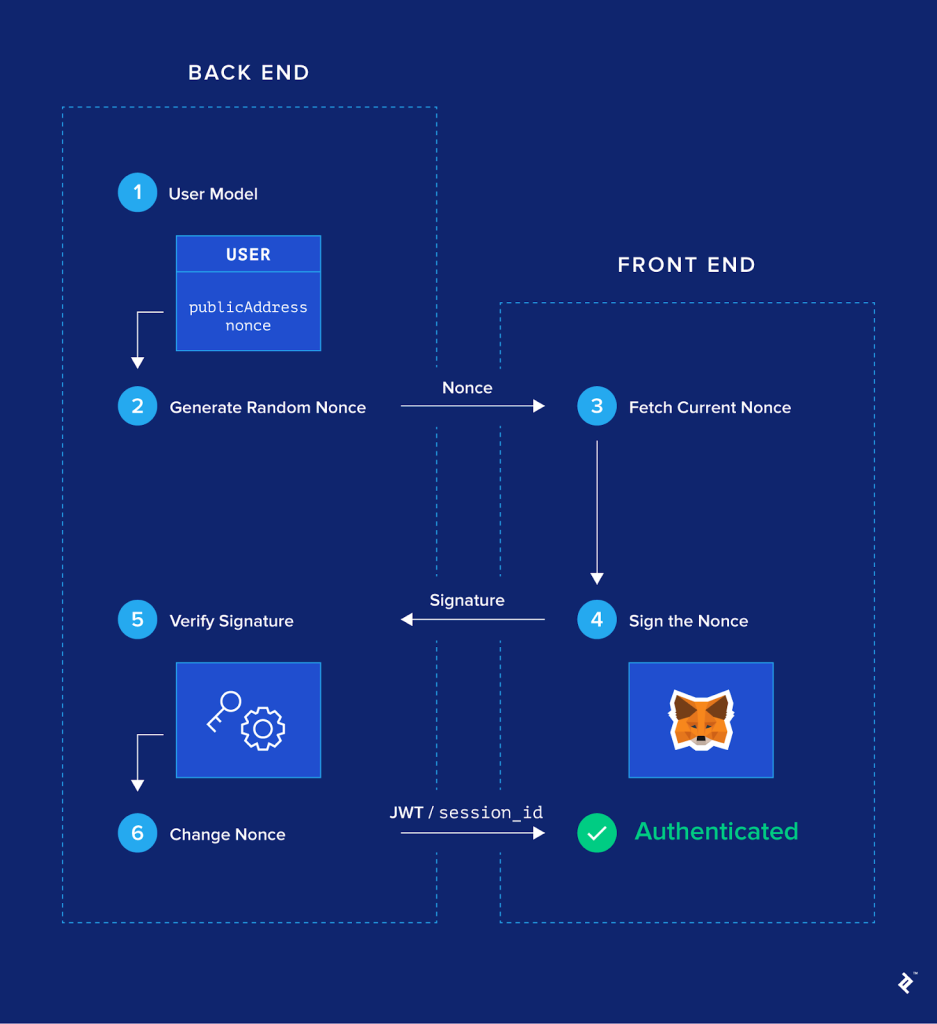
A user-first Web3 authentication flow using wallet-based login abstracts cryptographic complexity through nonce signing, allowing users to authenticate securely without managing passwords or exposing private keys (Source: MetaMask Developer Documentation)
Instead, teams should design around user needs and expectations, then fit the blockchain tech in seamlessly (user-first). Here’s what a user-first approach looks like in practice:
- Abstracting Complexity: A user-first Web3 product hides the blockchain complexity under the hood. Users shouldn’t need to manually manage keys or understand multiple networks. For instance, some modern wallets and dApps now use social login or email signup to create a crypto wallet behind the scenes. The user might simply log in with Google or Facebook – a familiar process – and the app quietly creates and manages a crypto wallet for them. No seed phrases upfront, no manual wallet setup. This kind of abstraction drastically lowers the entry barrier. Similarly, user-first design can auto-handle network selection or use tech that works across chains, so the user isn’t forced to figure out which network to use.
- Guiding and Educating In-App: Instead of expecting users to know crypto concepts, a user-first product provides just-in-time guidance. When a new concept or action comes up (say, “Enable smart contract”), the interface explains in simple terms what it means and why it’s needed, right at that moment. Tooltips, tutorials, and friendly language turn a baffling process into a guided tour. The idea is to onboard through education, but in a seamless way that feels like part of using the app (not a separate homework assignment). By reducing jargon and offering help at the exact point of confusion, products can prevent users from getting stuck or feeling stupid.
- Minimizing Steps and Friction: Every additional click, form, or confirmation in an app is an opportunity for the user to drop off. User-first Web3 design scrutinizes every step of the user journey and asks, “Is this step really necessary? How can we make it easier or remove it?” For example, instead of requiring users to have ETH for gas, a dApp could implement gasless transactions or cover the gas fees for the user (perhaps by batching transactions or using a relay service). If funding an account is needed, provide an in-app way to buy crypto with a credit card or let the user start with a free trial amount of transactions. By streamlining the flow and removing unnecessary roadblocks, you let users experience the app’s value faster with less effort.
- Building Trust and Safety Nets: User-first also means considering the emotional state of users. New users are often anxious about making a mistake. Simple features like undo options, confirmations with clear warnings, and secure recovery methods for accounts can go a long way. For instance, “undo” on blockchain is tricky, but some apps allow users to simulate transactions beforehand or provide cancel windows on certain actions. Additionally, integrating some form of customer support or community help (even if decentralized) can reassure users that they aren’t alone if they encounter issues. These safety nets make mainstream users more comfortable giving Web3 a try, which is essential for adoption.
In short, fixing the Web3 user adoption problem requires rethinking the product from the user’s perspective. The blockchain should be invisible to the user as much as possible – what matters is the benefit the user gets, not the intricate process to get there. This is where companies like Twendee come into play, helping Web3 projects transform their UX and onboarding to truly put users first.
Conclusion
Most Web3 products struggle to reach real users not because of lackluster ideas or poor engineering, but because the average person finds them too difficult to use. By addressing core issues like UX design, onboarding friction and complex payment flows, we can unlock the true potential of decentralized technologies. The next generation of Web3 success stories will be those that make decentralization invisible and put user experience front and center.
If you have a promising Web3 product but you’re not seeing the user uptake you hoped for, don’t wait until it’s too late. Prioritize your users now. Twendee’s expert team is here to help you transform high-potential blockchain products into user-friendly solutions ready for mainstream adoption. Let’s break down the barriers together, reach out to us to discover how our IT services in Web3 UX design and development can boost your project’s user adoption. The future of Web3 belongs to those who build for the user, and with the right approach, your product could be among the pioneers that finally bring real users into the Web3 revolution.
Contact us: Twitter & LinkedIn Page
Read latest blog: Essential Technical Checklist Before Any CEX or DEX Listing