

In the world of Web3, developers often face a stark tradeoff between decentralization and user experience. In Web3, “your product is a public system. Code is policy.” Unlike Web2 apps (which can be patched behind the scenes), blockchain code is immutable, so architecture decisions must be made upfront. Teams that ignore such tradeoffs often stumble: as one guide notes, teams “pretended tradeoffs weren’t tradeoffs,” which usually ended in failure.
For perspective, surveys show only about 8% of users say they are very familiar with Web3. This steep learning curve means a bad UX will quickly turn people away. In early-stage products, prioritizing usability and product-market fit is crucial.
The Decentralization vs. UX/Scalability Tradeoff in Blockchain Architecture
Blockchain design forces difficult choices. According to the scalability trilemma, a network can optimize only two of these at a time: decentralization, security, and scalability. In practice, this means:
- Decentralization vs. Scalability: More independent nodes boost trust but slow down the network. For example, Bitcoin’s decentralized blockchain processes only a fraction of Visa’s transactions, while chains that trade some decentralization for speed (like Solana) can handle tens of thousands of TPS.
- Decentralization vs. User Experience: Each step toward decentralization adds user friction, wallet prompts, key management, chain switching, confusing gas fees, etc.. Most users prefer convenience and speed over self-custody hassles. A UX guide observes “the more decentralized you go, the more friction you inherit”.
- Decentralization vs. Cost/Speed: Fully decentralized architectures require heavy infrastructure. Analysis shows early-stage blockchains that mimic Ethereum’s model can incur 100× higher costs and slower iteration than centralized competitors. For example, launching with a 1,000-node network may waste ~$500K/year in hardware costs.
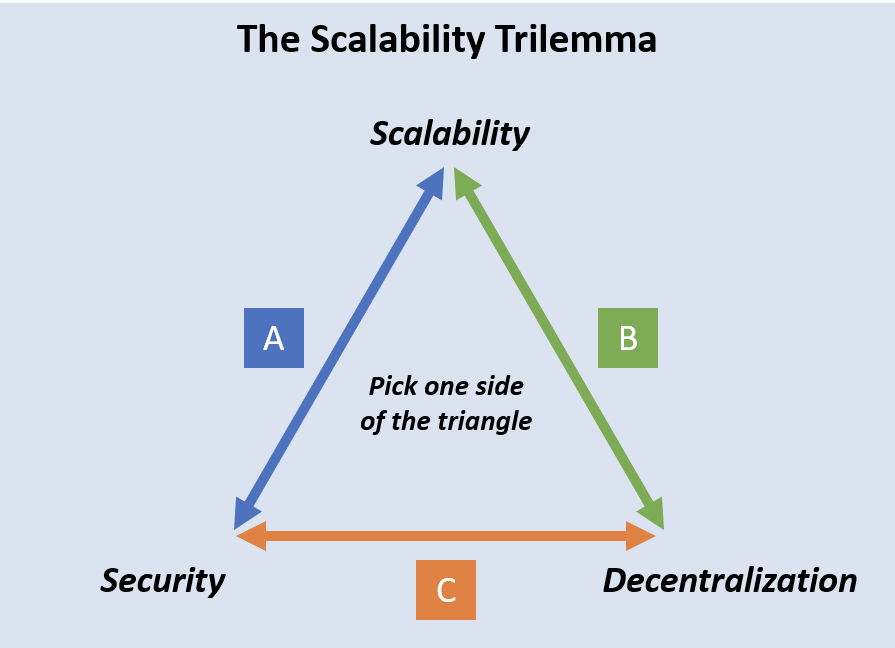
The blockchain scalability trilemma illustrates why decentralization, security, and scalability cannot be fully optimized at the same time (Source: Medium)
These tradeoffs are concrete. Ethereum’s mainnet (highly decentralized) manages only ~15–30 TPS, whereas Solana’s network reaches ~65,000 TPS. That is why we often say “you can’t have it all.” Each degree of decentralization must be managed carefully.
Why Over-Optimizing Decentralization Hurts Early-Stage Products
Pushing decentralization too early often backfires. Early-stage product teams need a great user experience and product-market fit first blockchain purism comes later. For example, when calling a ride-hailing service at 3 AM, a user wants the fastest, cheapest ride home, not proof of full decentralization. Most consumers won’t choose inconvenience for ideological purity.
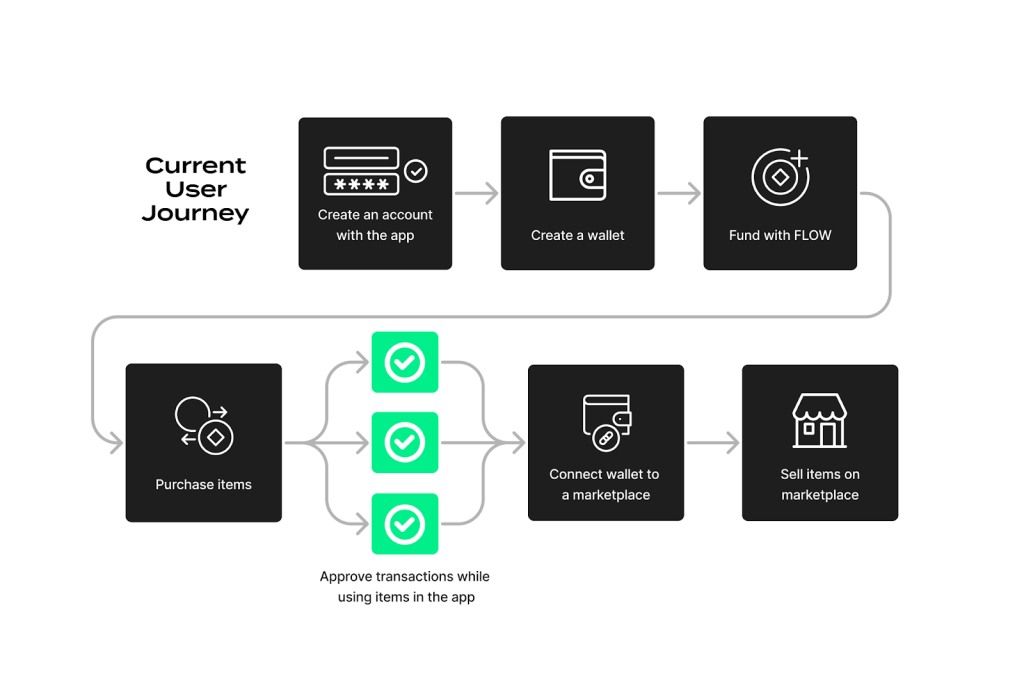
A typical Web3 user journey often introduces multiple friction points before users reach real value (Source: Flow)
Common pitfalls of premature decentralization include:
- High Upfront Costs: Bootstrapping full decentralization is expensive. Launching with thousands of validators can waste >$500K per year compared to a small 5–7 node network (~$50K/year).
- Slow Time-to-Market: Over-engineered systems delay progress. For example, dYdX’s effort to “fully decentralize” its exchange (migrating to a custom Cosmos chain) cost $50M+ and 18 months of development, with little immediate benefit.
- User Drop-Off: Cumbersome onboarding deters mainstream users. Ethereum’s DApp usage even dropped ~17% due to high fees and complexity, while more user-friendly chains gained traction.
- Limited Throughput: Decentralized networks inherently have lower TPS. Ethereum and Bitcoin handle only ~15–30 TPS, whereas performance-focused chains can reach 65,000.
Crucially, early decentralization can undermine product-market fit. “Premature decentralization sacrifices product-market fit for a security property most users do not value,” warns ChainScore Labs. In other words, security is a feature but not the core product; users care more about cost, speed, and ease-of-use. For example, someone using a ride-sharing DApp doesn’t care about 51% attack guarantees, they just want the cheapest, fastest ride.
Best Practices: Building Web3 Step-by-Step
Savvy Web3 teams manage these tradeoffs by phasing their design:
- Prioritize Core Product & UX First: Deliver a seamless experience even if it uses centralized components. Use APIs (e.g. Infura/Alchemy) or a single sequencer to ensure speed. Solve the user’s main problem before adding blockchain complexity.
- Lean Validator Set Early: Don’t start with an oversized network. Begin with a small, permissioned set (e.g. 5–7 nodes at ~$50K/year). Expand only after you have a solid user base (e.g. >10K daily active users).
- Gradual Governance: Delay public on-chain voting. Use a core-team multisig for the first 12–18 months. Transition to decentralized governance only after the protocol and community are stable.
- Layered Architecture: Leverage existing security. Launch as a Layer-2 rollup or sidechain on Ethereum to inherit its ~$20B security pool. Use shared sequencers or temporary centralized services initially, then migrate to a standalone chain if justified by demand.
- Hybrid Deployment: Mix centralized and decentralized layers intelligently. Even fully decentralized visions often use centralized APIs or databases for performance. Apply decentralization where it adds user value (e.g. token ownership) and use centralization for heavy lifting (e.g. content delivery).
- Rapid Iteration with Feedback: Continuously test and refine. Simplify onboarding by using modern wallets that mask complexity. For example, account abstraction enables social recovery (trusted contacts restore access), seedless wallets, and biometric logins – making self-custody accessible without sacrificing security.
- Analytics & Metrics: Track real user behavior closely. Measure drop-offs at wallet setup, transaction signing, and multi-chain flows. For example, if half of your users fail to confirm a token swap, focus on streamlining that flow. Use these insights to prioritize which blockchain features to implement next.
In short, optimize for product-market fit first, then decentralize the bottlenecks. This pragmatic roadmap underpins successful platforms. For example, Solana captured developer mindshare by “over-engineering for performance, not for ideological purity,” running ~400ms blocks and $0.001 fees to win adoption. Only after gaining traction did it open up more validators and features.
Conclusion
Decentralization is the promise of Web3, but when and how to pursue it is critical. History and data show that diving into full decentralization too soon compromises UX and growth. A hybrid strategy wins: deliver a seamless, Web2-like experience now, and layer in decentralization as your product scales.
As one analysis puts it, “the future internet will be a blend of decentralized trust systems and centralized performance layers.” Ultimately, UX is the defining factor in blockchain adoption. The best user experience and by extension the best technology stack, wins the most users.
Achieve product-market fit with a fast, usable app; only then decentralize the layers that truly benefit your users. This approach avoids the fatal trap of early hyper-decentralization and sets your project up for sustainable success.
For builders and investors alike, the lesson is data-driven: decentralize gradually and justify each step with real user metrics. This pragmatic approach maximizes both adoption and ROI.
Ready to strike the right balance? Contact Twendee to leverage our IT services for scalable Web3 architecture. We’ll help you build a product that delights users today and unlocks decentralization where it adds real value.
Contact us: Twitter & LinkedIn Page
Read latest blog: Why Stablecoins Matter More Than New Tokens