

Enterprise AI can read documents, summarize information, answer questions, and prepare recommendations. But in real business operations, a correct-sounding answer is not always a useful answer.
A customer question may depend on contract terms, order status, payment history, support tickets, approval rules, and internal policy. A finance request may depend on budget ownership, vendor history, invoice status, and risk level. If AI sees only one part of that context, it may produce an answer that sounds confident but misses the business reality behind the request.
This is why enterprise AI needs a shared business context layer. AI needs more than access to data. It needs a reliable way to understand what that data means inside real workflows, across departments, systems, permissions, and decisions.
Enterprise AI Breaks When Context Lives in Different Systems
Most enterprise data does not live in one place.
CRM may hold customer relationships and sales activity. ERP may hold orders, inventory, procurement, and operational records. Finance systems may hold invoices, payments, budgets, and cost centers. Support tools may hold customer issues and service history. Internal systems may hold approvals, policies, responsibilities, and workflow status.
Each system may be accurate on its own. The problem appears when AI needs to support a decision that crosses those systems.
Take a simple refund request. AI may read the customer’s message and understand that the customer wants money back. But the business decision depends on more than the message. The company may need to know:
- Whether the order has been delivered.
- Whether payment has been confirmed.
- Which refund policy applies.
- Whether the customer is under a special contract.
- Whether the refund amount needs manager approval.
- Whether there are previous disputes or support tickets.
If AI cannot see that wider context, it may suggest the wrong next step. It may draft a polite response but miss a policy condition. It may recommend escalation without knowing that finance has already resolved the payment issue. It may treat a high-value customer like a standard case because contract information sits somewhere else.
Gartner defines context engineering as designing and structuring relevant data, workflows, and environments so AI systems can understand intent, make better decisions, and deliver outcomes aligned with the enterprise. Gartner also emphasizes that organizations need accountability, processes, and technologies to curate and govern the context AI systems use for decisions.
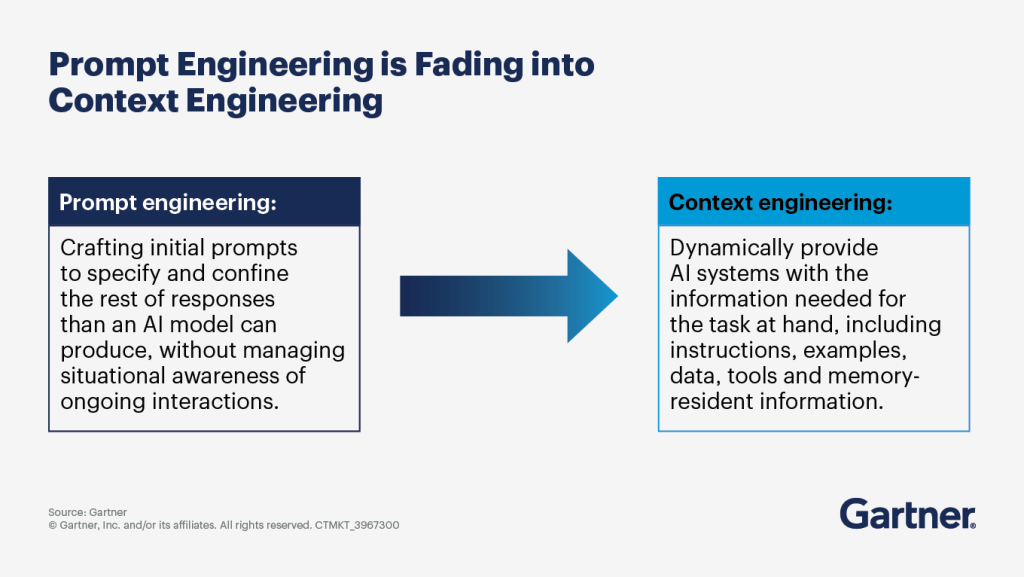
That definition matters because context is no longer just what a user writes into a prompt. In enterprise AI, context includes the operational situation around the request: customer status, workflow stage, policy constraints, data source, permissions, business rules, and the history of what already happened.
A Shared Business Context Layer Gives AI the Meaning Behind Data
An enterprise AI context layer is the layer that connects and organizes business context from different systems so AI can reason with a more complete view of the situation.
It is different from a simple knowledge base. A knowledge base may help AI retrieve a policy document or answer a general question. A business context layer connects that knowledge to live business entities and workflows: customers, orders, invoices, contracts, tickets, approvals, owners, and system status.
For example, AI supporting customer service should not only know the return policy. It should also know whether this customer’s order qualifies for that policy, whether the item has been shipped, whether payment has cleared, and whether the case requires human review. AI supporting finance should not only summarize invoice data. It should understand vendor history, budget ownership, payment status, approval limits, and exception rules.
This shared context layer may include:
- Customer profiles and account history.
- Transaction and order records.
- Contract terms and service policies.
- Internal approval rules.
- Role-based permissions.
- Financial status and risk indicators.
- Support tickets and interaction history.
- Previous decisions and execution records.
The value comes from connecting these pieces in a way AI can use reliably. Without that connection, each AI workflow depends on the user to bring the missing background. One employee may paste the right policy into the prompt. Another may forget the payment status. Another may use an outdated file. The AI output then becomes inconsistent because the input context is inconsistent.
A shared context layer reduces that dependency. It gives AI applications a structured way to retrieve the right context for the right task, based on the user, workflow, data source, and business rule involved.
Better Context Improves AI Decision Quality
Enterprise AI becomes more valuable when it supports decisions, not just content generation.
OpenAI’s State of Enterprise AI report says the next phase of enterprise AI will be shaped by better performance on economically valuable tasks, better understanding of organizational context, and a shift from asking models for outputs to delegating complex, multi-step workflows. The report also notes that ChatGPT message volume grew 8x and API reasoning token consumption per organization increased 320x year over year, showing stronger enterprise usage intensity.
That shift changes what AI needs. If AI only drafts an email, limited context may be acceptable. If AI prepares a sales action, routes a service case, flags a finance risk, or recommends an operational decision, incomplete context becomes a real business problem.
Better context helps AI do several things more reliably:
- Give answers that fit the actual customer or business situation.
- Avoid recommendations that violate policy, approval rules, or data constraints.
- Recognize when information is missing or conflicting.
- Escalate cases that require human authority.
- Explain which source or business rule supports a recommendation.
- Keep decisions consistent across teams and workflows.
Gartner’s 2025 prediction on AI models reinforces this point. Gartner expects organizations to use small, task-specific AI models at least three times more than general-purpose large language models by 2027, and notes that general-purpose LLM accuracy declines for tasks requiring specific business domain context.
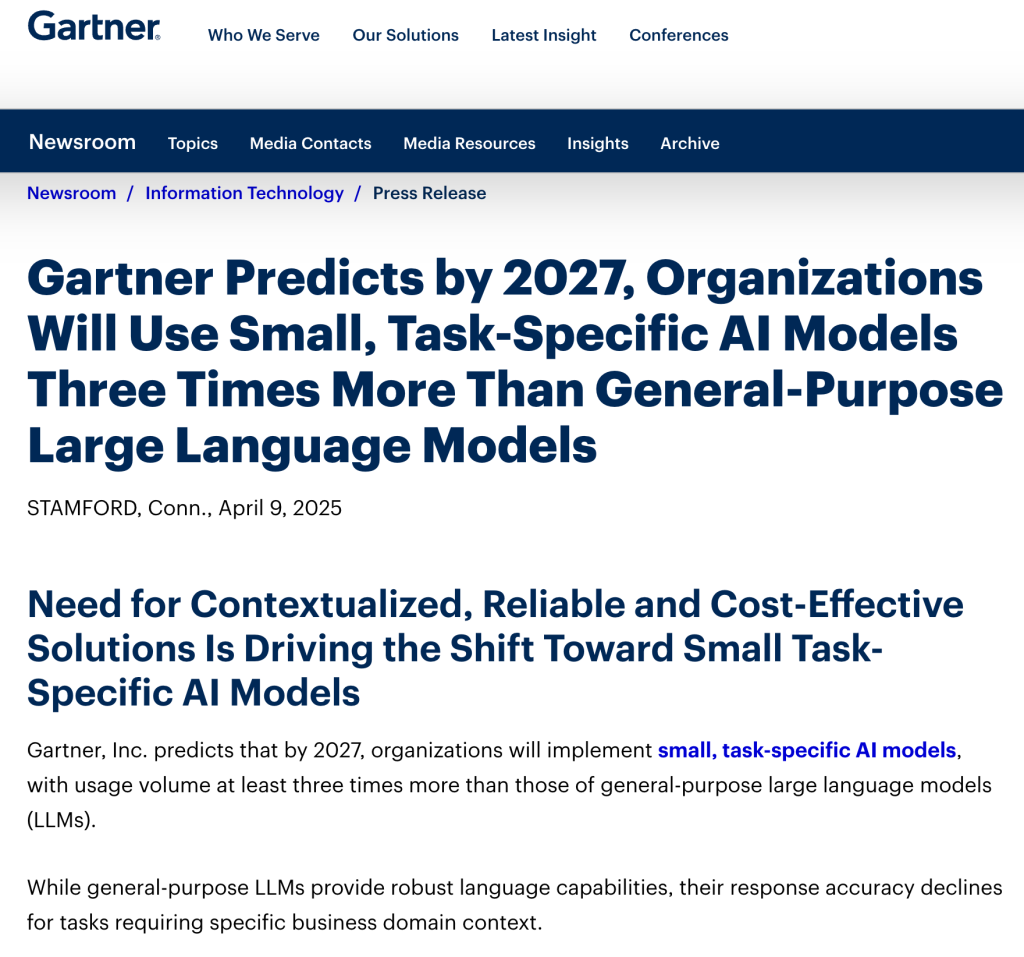
That does not mean every company needs many specialized models immediately. The deeper point is that enterprise AI performance depends heavily on business context. A model may be strong at language, but business decisions require knowledge of how the company works: which policy applies, which data source is trusted, which department owns the next step, and which action is allowed.
Context Management Is an Architecture Problem, Not a Prompting Problem
Many AI projects start by improving prompts. That helps in early experimentation, but prompting alone cannot solve enterprise context problems.
If customer data, finance data, support history, approval rules, and workflow status all live in separate systems, the user has to manually assemble the situation for AI. That creates three problems.
The first problem is inconsistency. Different employees describe the same case in different ways, include different details, and use different files.
The second problem is risk. Sensitive information may be pasted into tools without clear permission rules, source control, or audit history.
The third problem is scale. As AI moves into more workflows, manually preparing context for every task becomes slow and unreliable.
This is why AI context management needs architecture. Enterprises need to define how AI connects to source systems, how it identifies business entities, how it respects permissions, how it checks source reliability, and how it updates context when business status changes.
A practical context architecture should define:
- Which systems provide the source of truth.
- How entities such as customer, order, invoice, contract, and ticket are linked.
- Which users or AI workflows can access which data.
- How context is retrieved for each task.
- How conflicting or missing context is handled.
- Which sources must be cited or logged.
- Which recommendations require human approval.
This is where Twendee’s role becomes practical. Twendee helps enterprises connect ERP, CRM, finance, support, and internal systems into a shared knowledge layer so AI applications can work from consistent business context instead of isolated data fragments. For companies building AI into real operations, that foundation matters more than adding another standalone chatbot.
A context layer also helps the organization improve over time. Once AI decisions are tied to sources, workflows, permissions, and outcomes, teams can see where the context is weak. They can identify missing data, outdated policies, unclear ownership, and repeated exceptions. That feedback loop is difficult to build when every AI interaction depends on a one-off prompt.
What Enterprises Should Build Before Scaling AI Workflows
A shared context layer does not need to begin as a massive data transformation project. It can start with one workflow where business context clearly affects the quality of AI output.
Customer support, finance approval, procurement, sales operations, contract review, and vendor management are often good starting points because they depend on context from multiple systems.
Before scaling AI workflows, enterprises should answer a few practical questions:
- Which business entities does AI need to understand?
- Where does the related data currently live?
- Which workflow needs context across departments?
- Which data source should AI treat as the source of truth?
- Which actions can AI suggest, draft, or trigger?
- Which actions require human approval?
- How should the system respond when context is incomplete or conflicting?
- What should be logged for audit, compliance, or improvement?
These questions keep AI design grounded in business reality. They also prevent a common problem: launching AI tools that work well in a demo but break when exposed to messy, cross-functional operations.
An enterprise knowledge layer should give AI a stable foundation for retrieving business context, but it should also stay connected to live systems. Customer status changes. Orders move. Payments clear. Tickets reopen. Policies update. Approval owners change. A static document repository cannot carry that operational context alone.
Enterprise AI needs a context layer that can evolve with the business.
Conclusion
Enterprise AI performs more consistently when it works from shared business context. Data access alone is not enough. AI needs to understand how customer, operational, financial, and policy data connect inside real workflows.
An enterprise AI context layer gives AI that foundation. It connects the meaning behind enterprise data: who the customer is, what has happened, which rule applies, which system is trusted, who owns the next step, and what action is allowed.
As AI moves from simple outputs to multi-step workflows, context becomes a core architecture decision. Without it, AI remains dependent on whatever background each user remembers to provide. With it, AI can support decisions more consistently across departments, systems, and business processes.
For enterprises building AI into operations, Twendee helps design architectures that connect business systems into a shared knowledge layer, so AI applications can understand context across departments and support workflows with greater consistency.
Book a call: Calendly
Read latest blog: Why Enterprise AI Projects Stall After the First Success