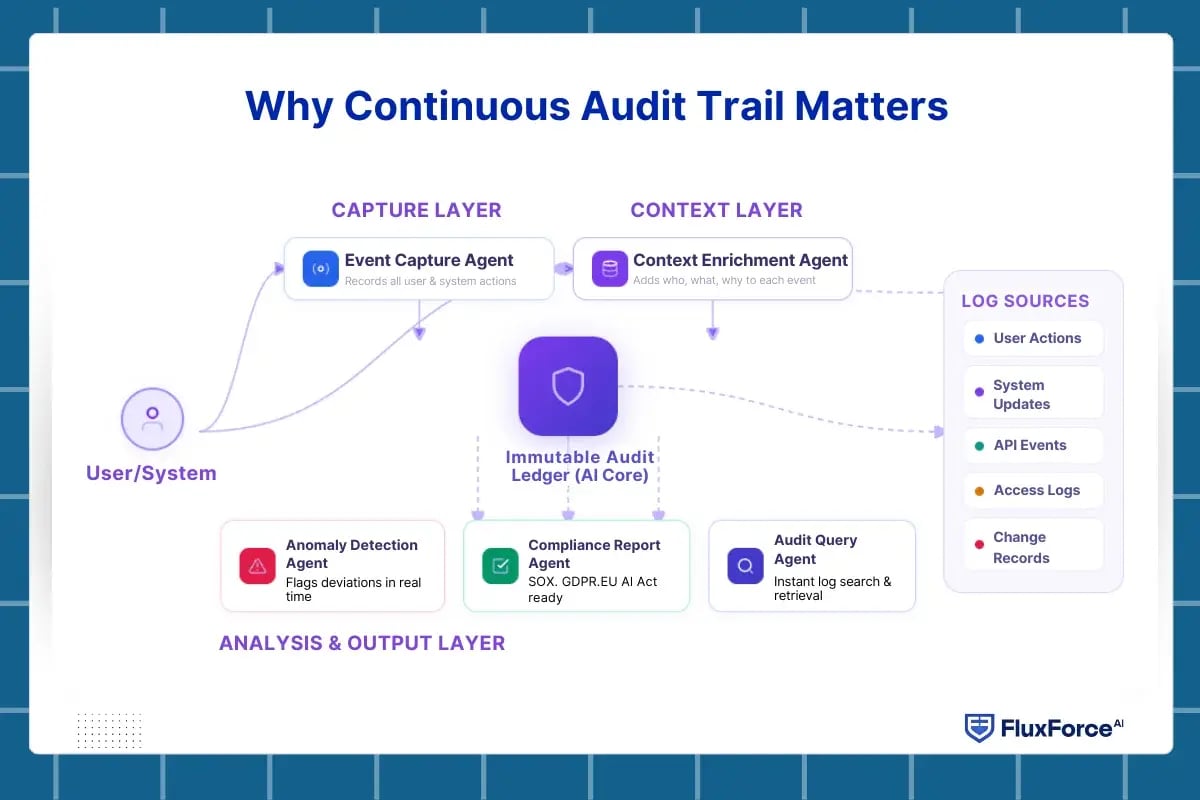

Finance teams are under pressure to close faster, approve faster, report faster, and reduce manual work without weakening control. AI seems like the obvious answer. It can read invoices, summarize reports, detect anomalies, prepare reconciliations, route approvals, and support forecasting.
The risk is that finance automation does not behave like ordinary productivity automation. It touches payments, sensitive data, audit evidence, compliance rules, and management decisions. When AI enters finance workflows without clear governance, speed can create new exposure.
That is why AI governance for finance is becoming a practical requirement before automation can scale. Finance teams do not only need AI tools. They need governed AI systems with audit trails, permission logic, traceable decisions, and reliable data access.
Why AI governance for finance is becoming a control issue, not just a technology issue
Finance has always depended on control. Every payment, journal entry, approval, forecast, report, and compliance document carries a level of accountability. Traditional finance systems were built around this logic: defined roles, approval thresholds, supporting documents, audit logs, and segregation of duties.
AI changes the control environment because it can sit between the user and the system. A finance employee may ask AI to summarize spending, review invoices, classify expenses, explain a variance, or prepare an approval recommendation. If the AI system has broad access but weak governance, it can expose restricted data, produce untraceable outputs, or influence decisions without enough evidence.
This is already becoming a measurable risk. IBM’s 2025 Cost of a Data Breach Report found that 13% of organizations reported breaches involving AI models or applications, and 97% of those organizations lacked proper AI access controls. IBM also reported that the global average cost of a data breach was USD 4.44 million. (IBM)
For finance teams, this finding is especially relevant. Finance workflows often connect bank details, vendor records, employee reimbursement data, customer billing, payroll-related information, contracts, revenue reports, and management forecasts. If AI is connected to these systems without role-based access, it becomes a new channel for sensitive data exposure.The fraud context also matters. ACFE’s 2024 Report to the Nations, based on 2,402 real occupational fraud cases across 143 countries and territories, estimates that a typical organization loses 5% of revenue each year to occupational fraud (ACFE). In that environment, finance automation cannot be designed around speed alone. Any system that helps approve, classify, route, or recommend financial actions must preserve accountability.
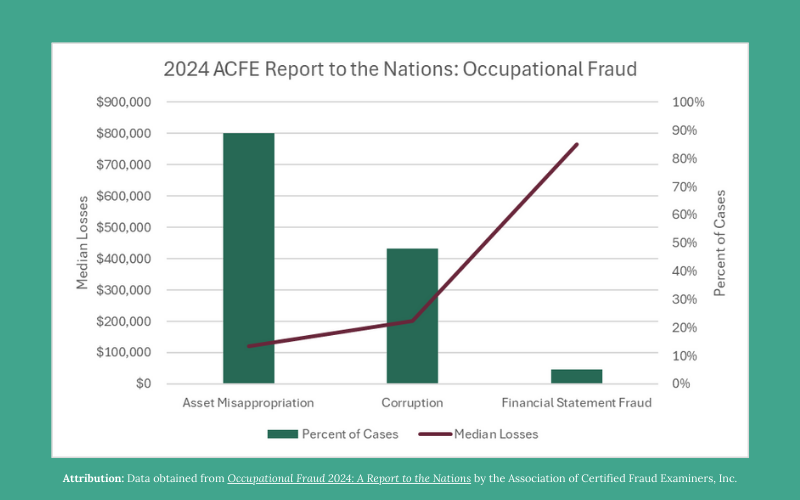
This is where AI risk management becomes operational. Finance teams need to know what the AI system accessed, what it recommended, who reviewed it, what decision followed, and whether the result can be tested later. Without that chain, AI may reduce manual effort while weakening the evidence finance teams need most.
Where AI compliance finance breaks when automation moves too fast
Many finance teams start AI automation with narrow use cases: invoice extraction, reporting summaries, expense classification, reconciliation support, or payment approval routing. These use cases look safe because they are practical and familiar. The problem appears when they begin to influence decisions at scale.
Deloitte’s 2025 guidance on AI transparency in finance and accounting emphasizes the need for data quality controls and audit trail maintenance. It notes that archiving both inputs and outputs, as well as managing changes to AI models and datasets, can help maintain a thorough audit trail. That guidance speaks directly to the finance function, where auditability is not optional.
1. Invoice and payment automation need permission logic
Invoice automation is one of the easiest places to see the governance problem. AI can extract invoice data, compare amounts, identify missing fields, match purchase orders, and suggest approval routing. That can save time, but it also creates risk if permissions are too broad.
A junior employee may be allowed to submit an invoice but not approve payment. A department manager may approve expenses only under a certain threshold. Finance may need to review exceptions before payment release. Procurement may need visibility into vendor records but not banking details.
A governed finance AI system should respect those boundaries. It should not summarize bank information for users who cannot access it. It should not recommend approval without checking thresholds. It should not route exceptions as normal transactions. In finance, AI automation needs to follow the same control logic as the finance process itself.
2. Reporting automation needs traceable inputs and outputs
AI-generated financial summaries can be useful, especially for management reporting. A system can explain revenue movement, summarize expense trends, highlight variance drivers, or prepare commentary for monthly review.
But financial reporting is not only about generating a clear narrative. It is about whether the narrative can be traced back to source data. If AI explains a margin change, finance teams need to know which dataset, period, entity, account, and assumption shaped that explanation.This is where AI audit trail design becomes critical. A useful audit trail should capture the prompt or user request, source records used, generated output, reviewer action, edits, approval status, and timestamp. For finance teams, this record is not just for compliance. It allows managers and auditors to test whether AI-supported reporting is accurate, complete, and consistent.
Without traceability, AI-generated reporting can become polished but fragile. It may sound convincing, but finance cannot rely on it confidently.
3. Decision support needs clear human review boundaries
AI can support finance decisions, but not every decision should be automated. Some tasks can be fully automated because they are low-risk and rule-based. Others should remain recommendations. Higher-risk decisions need human approval, especially when they involve payments, exceptions, credit, compliance, or financial reporting judgments.
A practical control model can divide finance AI use cases into clear tiers:
- Low-risk support: Summarizing policies, drafting explanations, preparing routine report notes.
- Workflow support: Routing invoices, checking missing fields, flagging duplicate records.
- Decision support: Recommending approval status, identifying unusual transactions, explaining forecast variance.
- Restricted actions: Final payment approval, compliance-sensitive financial judgments, employee-related financial decisions.
This tiered model helps finance teams avoid two extremes. One extreme is blocking AI completely because of risk. The other is automating too much before controls are ready. The better path is to define what AI can assist, what it can recommend, and where human approval remains mandatory.
How governed AI systems should be designed for finance teams
AI governance for finance should be built into workflow design, not written as a separate policy after deployment. Finance teams need systems where access control, approval logic, audit trails, and exception handling are part of daily operations.
NIST’s AI Risk Management Framework is useful because it frames AI risk management around Govern, Map, Measure, and Manage. The “Govern” function applies across the AI lifecycle, which reinforces that governance should guide how AI systems are designed, monitored, and improved from the beginning. (NIST)
For finance, this means governance should appear inside the system in practical ways.
The first layer is role-based access control. AI should only retrieve and summarize data the user is allowed to see. A finance manager, accountant, sales lead, and department head should not receive the same level of financial detail simply because they use the same AI interface.
The second layer is workflow-level auditability. Every AI-supported financial action should leave a record. This includes source data, user request, AI output, reviewer response, approval status, and any later correction. Audit trails should help finance teams prove what happened and improve the system when errors appear.
The third layer is decision control. AI should support decisions according to risk level. Routine routing can be automated. Exceptions should be flagged. Sensitive approvals should require human review. This structure protects finance teams from turning AI into an uncontrolled decision engine.
The fourth layer is data reliability. AI automation depends on accurate vendor data, invoice records, budget structures, approval rules, and account mappings. If finance data is inconsistent, AI will scale inconsistency faster. Governance therefore needs to include data validation, conflict rules, and ownership of core financial records.
This is where Twendee’s role becomes relevant. Twendee builds AI-enabled systems with audit trails, permission logic, and controlled workflows, then integrates AI into finance operations through ERP and internal business systems. Instead of placing AI above finance as a generic assistant, Twendee designs AI around the actual workflow: who can access data, who can approve actions, what must be logged, and where human review is required.
For finance teams, that implementation approach matters. AI should not create another disconnected layer that finance later has to control manually. It should strengthen the control environment while reducing repetitive work.
Why finance AI automation needs governance before scale
Finance teams are usually measured by accuracy, timeliness, compliance, and control. AI can improve all four, but only when governance is designed into the system.
The strongest finance AI use cases are practical. AI can reduce invoice review time, summarize monthly reports, detect anomalies, prepare reconciliation notes, route approval requests, and help managers see exceptions faster. These use cases create value because they reduce manual effort without removing accountability.
But scale changes the risk. A single AI-generated summary may be harmless. Thousands of AI-supported finance actions each month require stronger control. Without governance, finance teams may struggle to explain why a payment was routed, why an exception was ignored, why a report changed, or who approved an AI-supported recommendation.
That is why AI compliance finance should not be treated as a blocker. It is what allows automation to move from pilot to production. When permissions, audit trails, decision rules, and data access are clear, finance leaders can scale AI with more confidence.
Conclusion
Finance teams do not need AI automation at any cost. They need automation that preserves trust.
As AI enters approvals, payments, reporting, reconciliation, and compliance workflows, finance teams need governed systems that make every AI-supported action traceable, permission-aware, and reviewable. Without that foundation, automation may move faster than the control environment can support.
Strong AI governance for finance gives companies a safer path to scale. Twendee helps build AI-enabled finance systems with audit trails, permission logic, and controlled workflows, integrating AI into ERP and internal business systems so finance teams can automate with visibility, accountability, and confidence.
Book a call: Calendly
Read latest blog: AI Workloads Are Breaking Old Cloud Cost Planning Models